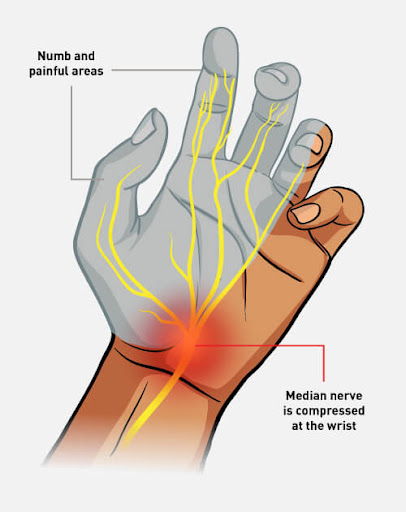
Physiotherapy for Carpal Tunnel Syndrome (CTS) focuses on decompressing the median nerve, reducin…
Physiotherapy for Carpal Tunnel Syndrome (CTS) focuses on decompressing the median nerve, reducing inflammation, and correcting ergonomic habits. Treatment typically involves wrist splinting to keep the joint neutral, nerve glides to promote mobility, and gentle stretches to relieve tension in the tendons and forearm muscles.Core Physiotherapy Treatment ComponentsSplinting and Bracing: Wearing a rigid wrist splint—especially while sleeping—keeps the wrist in a neutral position. This prevents the carpal tunnel from narrowing and minimizes nerve compression overnight.Nerve Gliding Techniques: Specific movements (like making a fist, extending the fingers, and gently bending the wrist) help the median nerve slide freely within the carpal tunnel, preventing scarring and reducing localized irritation.Stretching and Strengthening: Gentle stretches improve the flexibility of tight forearm muscles. Once acute pain subsides, strengthening exercises help stabilize the wrist and upper back to prevent muscle imbalances and future strain.Passive Modalities: To manage pain and inflammation, physiotherapists may utilize physical agents such as therapeutic ultrasound, low-level laser therapy, or shockwave therapy.Ergonomic Modifications: Therapists will evaluate your workstation and daily habits to ensure neutral wrist positioning. They often recommend frequent stretch breaks and adjusting the height of your keyboard or desk to reduce repetitive stress.